

Most people ask which one is better. The more useful question is which one suits the window in front of you, because the answer changes from your bedroom to your kitchen to your balcony.
Here is how to decide, room by room, based on what each type actually does well in a Singapore flat.
The short version
Blinds win where the window is wet, greasy, awkwardly shaped, or where you want light angled through the day. Curtains win where you want darkness, quiet, a softer look across a large glass wall, and coverage that runs from ceiling to floor.
Plenty of homes use both, and often on the same window. More on that below.
Five things that decide it

What the window opens onto
A standard bedroom casement takes anything. A three metre sliding door needs something built for width, which usually means vertical blinds or curtains on a track, because a single wide roller has weight and deflection limits.
How dark you need the room
Blackout has a real definition, and blinds struggle to meet it. A blackout curtain running floor to ceiling and overlapping the wall on both sides gets closer to true darkness than any blind, because blinds leave light gaps at the sides of the recess. If the room is a bedroom for someone who sleeps in the day, this decides the question on its own.
Noise
Fabric mass absorbs sound, and blinds carry very little of it. If traffic or a corridor is the actual problem you are solving, acoustic curtains are the only one of the two that will make a real difference.
Moisture and grease
Fabric near a hob absorbs oil from the air and never fully releases it. Aluminium and faux wood wipe clean. This is why kitchens and bathrooms tend to end up with blinds even in homes that use curtains everywhere else.
Space around the window
Curtains need wall on either side to stack back into, plus floor clearance. In a bedroom where the wardrobe door swings close to the window, a blind rolling into a cassette a few centimetres deep is the practical answer.

Bedroom
Curtains, usually. You want darkness and quiet, and both come from fabric mass and full coverage. A day and night set on a double track gives you a sheer layer for the morning and a dim-out or blackout layer for sleeping.
Blinds work here when the room is small and the wall space is tight. A blackout roller blind handles a compact bedroom window well, though expect light along the edges. If you want the softness of fabric without the stack of a curtain, roman blinds sit between the two.
Living room
This depends on the window. Full-height glass and balcony doors suit curtains on a ceiling track, where an S-fold curtain hangs in even waves and stacks tidily to one side.
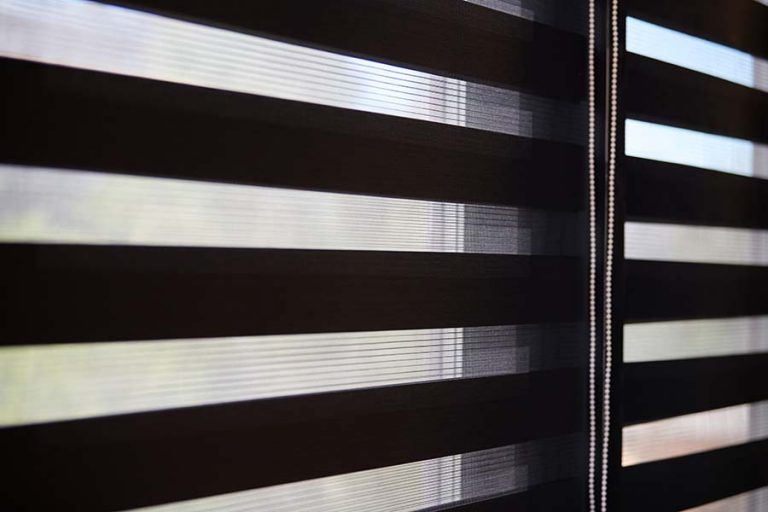
For a standard living room window where you adjust light through the day, combi blinds give you daytime privacy with the view still available, which suits units facing a common corridor or a facing block. They go dim rather than dark, which rarely matters in a living room.
Kitchen and bathroom
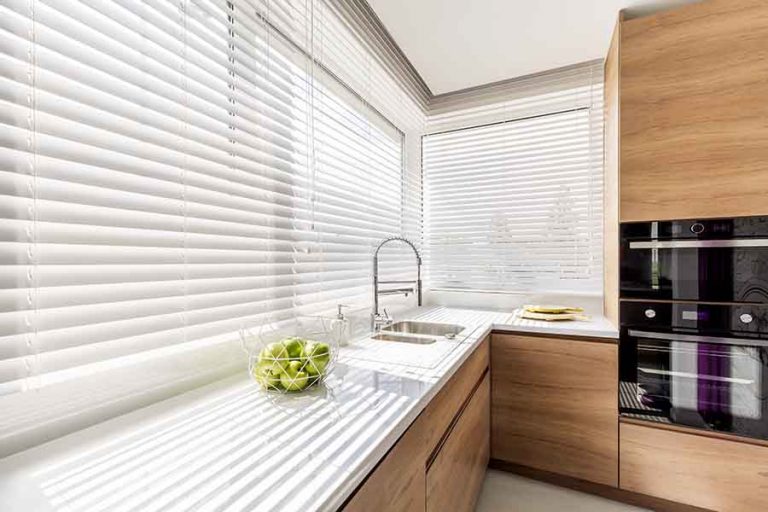
Blinds, almost always. Aluminium or faux wood venetian blinds handle humidity and wipe clean after cooking. Real wood warps in constant moisture, so keep it out of these rooms.
Fabric of any kind near a hob will hold oil. If you want a softer look in an open kitchen, keep the fabric on the dining side and put the wipe-clean product over the cooking window.
Study and home office
Glare on a screen is the problem to solve, and it moves through the day. Venetian and combi blinds both let you angle or filter light rather than choosing between open and shut.
If the room doubles as a video call space, fabric earns its place. A curtain on the wall behind you cuts echo noticeably, which matters more on calls than most people expect.
Balcony and sliding doors
Width decides it. Vertical blinds draw aside completely and handle wide spans, and curtains on a track do the same with a softer look. Combi and roller blinds usually have to be split into two or three units across an opening that wide, with a visible join between them.
If the sun is hitting the glass before it reaches the room, the better fix is outside. Outdoor blinds shade the opening itself, which stops more heat than anything mounted indoors.
Using both together
The combinations that work in Singapore homes:
- A blind for daytime light control with side curtains for softness and evening coverage. Common in living rooms.
- Sheer curtains on the outer track with a blackout roller behind, in bedrooms where wall space is short.
- Outdoor blinds on the balcony with indoor curtains behind the sliding door, which handles heat and privacy separately.
Two layers cost more than one. They also solve two different problems, so decide whether you have two problems before paying for both.
What each one costs to live with
Curtains cost more per window in most cases, because fabric is priced by width and gathered to nearly twice the track width. Blinds use a flat panel, so they use less material for the same opening. Our 2026 curtain price guide sets out the ranges by type and room size.
Running costs differ too. Blinds get wiped. Curtains come down, get cleaned and go back up, which is a job rather than a wipe. Neither is difficult, but they are different habits.

Getting it specified for your home
The decision is easier with someone standing in the room. We measure on site, bring samples for both product types, and quote them side by side if you want to compare. Browse the full ranges of curtains and blinds, or book a free consultation and measurement on +65 9627 6446.
FAQs about choosing between curtains and blinds
Are blinds cheaper than curtains?
Usually, for the same window. Curtain fabric is gathered to roughly twice the track width, so it uses more material than a flat blind panel covering the same opening. Fabric grade, lining and motorisation move both figures more than the product type does.
Can I put curtains and blinds on the same window?
Yes, and it is common. A blind handles daytime light control while curtains add softness and evening coverage, or a sheer curtain sits in front of a blackout roller. You are paying for two products, so it makes sense when you have two separate problems to solve.
Which is better for an HDB bedroom?
Curtains, if darkness or noise is the reason you are buying. If the room is small and there is little wall to stack a curtain into, a blackout roller blind or a roman blind is the practical choice, accepting some light along the edges.
Which is easier to clean in a Singapore kitchen?
Blinds, in aluminium or faux wood. Both wipe clean after cooking, while fabric near a hob absorbs oil from the air over time and does not vacuum out.
Do blinds block noise as well as curtains?
No. Sound absorption comes from fabric mass, and a blind carries very little of it. Where traffic or corridor noise is the problem, dense acoustic curtains with full coverage are the option that makes a measurable difference.
What works best on a wide sliding door?
Vertical blinds or curtains on a track. Both handle the width in one run and draw aside completely. Combi and roller blinds normally have to be split into two or three units across an opening that wide, leaving visible joins.